Laser Cleaning for Agricultural Equipment: Tractors, Implements & Farm Machinery
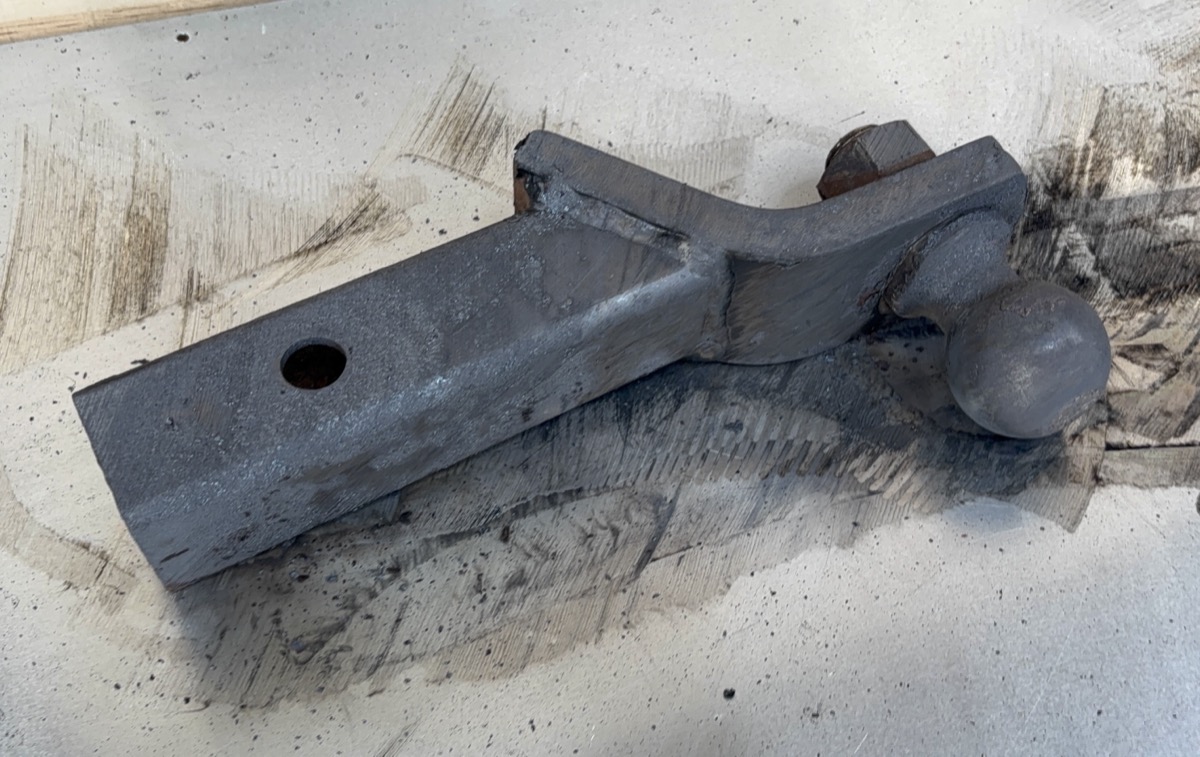
Farm equipment takes a beating that most industrial machinery never sees. Constant exposure to soil, moisture, fertilizer chemicals, crop acids, manure, and the full range of Midwest weather means corrosion isn't a question of if — it's a question of how fast. A tractor that rolled off the lot with a $250,000 price tag can lose $30,000–$60,000 in resale value from cosmetic rust and surface deterioration alone, even if the mechanicals are solid.
Traditional approaches to farm equipment surface prep — grinding, wire wheeling, sandblasting, chemical strippers — all work to some degree. But they're slow, messy, and each comes with trade-offs that make them less than ideal for the unique challenges agricultural equipment presents. Laser cleaning is changing that equation.
Why Farm Equipment Corrodes So Aggressively
Understanding the corrosion environment helps explain why agricultural equipment often deteriorates faster than equipment used in other industries:
- Fertilizer exposure: Ammonium nitrate, urea, potash, and liquid 28-0-0 are intensely corrosive to steel. Equipment that handles, spreads, or even drives through recently fertilized fields accumulates chemical residues that accelerate surface breakdown far beyond normal oxidation
- Soil contact: Tillage equipment, planter units, and anything that touches the ground experiences constant abrasion that strips protective coatings, followed by immediate moisture exposure through damp soil
- Crop acids and organic residues: Silage, grain dust, crop stalks, and manure all create acidic or moisture-trapping environments on equipment surfaces. A combine that sits with crop residue packed in its crevices will corrode dramatically faster than one that's cleaned after harvest
- Seasonal storage: Equipment that sits for months between seasons — sometimes outside — goes through repeated freeze-thaw-moisture cycles that drive corrosion into every joint, seam, and paint chip
- Road salt: Equipment transported on Midwest roads between fields picks up road salt that compounds every other corrosion factor
The result: farm equipment develops corrosion patterns that are widespread, chemically complex, and deeply embedded — exactly the kind of challenge where laser cleaning outperforms traditional methods.
Equipment-Specific Applications
Tractors
Tractors are the backbone of every farm operation and typically represent the largest single equipment investment. Corrosion targets hoods, fenders, cab roofs, loader frames, three-point hitches, and drawbars. For used tractor dealers and farmers preparing to sell, cosmetic condition directly determines price realization.
Laser cleaning excels on tractors because of the variety of surfaces involved. You might need to remove heavy rust from a drawbar, strip multiple layers of paint from a hood (it's common to find 3-4 repaint layers on a working tractor), clean corrosion from a loader frame, and prep a cab roof — all in one session. The laser handles each surface condition by adjusting power and speed, without switching tools or methods.
Key tractor areas for laser cleaning:
- Hoods and fenders: Sheet metal that's been repainted multiple times — laser strips cleanly to bare metal without warping thin panels
- Loader arms and frames: Heavy structural steel with impact damage and rust — laser cleans right up to hydraulic fittings without masking
- Three-point hitch and drawbar: Heavily worn and corroded from constant use — laser cleaning reveals the actual metal condition for inspection
- Cab and ROPS: Roof areas that hold moisture and develop deep corrosion — laser cleaning accesses tight areas between rollbar tubes
- Wheel hubs and rims: Packed with dirt and corroded — laser cleans without damaging bolt surfaces or wheel seal areas
Combines and Harvesting Equipment
Combines represent a unique challenge: massive surface areas, complex geometries, and seasonal use patterns that mean they sit for months accumulating moisture damage. A late-model combine can cost $500,000–$800,000, and the header alone might run $100,000+. Protecting that investment means keeping corrosion in check.
- Headers: Corn heads and draper headers develop corrosion on their frame structures, divider points, and gathering chains areas. Laser cleaning preps these surfaces for recoating during winter maintenance
- Feeder housing: The transition from header to threshing body sees intense wear and corrosion from crop material contact
- Grain tank and unloading auger: Interior moisture from residual grain and condensation causes corrosion that contaminates future loads. Laser cleaning reaches interior surfaces that are difficult to sandblast
- Sieves, chaffer, and cleaning shoe: These components accumulate crop residue that holds moisture — laser cleaning removes both the residue and resulting corrosion
- Undercarriage and axle areas: Mud, crop stubble, and moisture create aggressive corrosion zones that are difficult to access with grinding tools
Planters and Seeders
Precision planting equipment demands clean, properly maintained surfaces for accurate seed placement. Rust and buildup on seed meters, row unit frames, closing wheels, and gauge wheels affect planting performance. Laser cleaning is particularly valuable for seed meters and precision components where even minor abrasion from grinding or blasting can affect tolerances.
Tillage Equipment
Discs, chisel plows, field cultivators, and vertical tillage tools take the most direct abuse of any farm equipment. While the soil-engaging components (disc blades, sweeps, points) are consumable wear items, the frames, toolbars, gangs, and hydraulic assemblies all benefit from periodic laser cleaning and recoating to prevent structural corrosion that weakens the equipment over time.
Sprayers and Application Equipment
Sprayers face the double challenge of chemical corrosion (from the products they apply) and road salt corrosion (from field-to-field transport). Boom sections, tank exteriors, frame rails, and wheel assemblies all develop aggressive corrosion. Laser cleaning is especially valuable for boom sections where precision matters — corroded boom tubes affect spray pattern accuracy and structural integrity during full extension.
Fertilizer Equipment
Spreader trucks, nurse tanks, toolbar-mounted applicators, and anhydrous ammonia equipment face the most corrosive environment on the farm. Fertilizer-induced corrosion is chemically different from normal rust — it's faster, deeper, and more aggressive. Laser cleaning removes the contaminated surface layer thoroughly, which is critical because if fertilizer salts remain trapped under new paint, the corrosion continues from underneath and the new coating fails prematurely.
Traditional Methods vs. Laser Cleaning for Farm Equipment
| Criteria | Wire Wheel / Grinding | Sandblasting | Laser Cleaning |
|---|---|---|---|
| Thin sheet metal safety | Risk of warping/gouging | Risk of warping thin panels | No heat distortion or warping |
| Near hydraulic lines | Spark risk, vibration | Media contamination risk | No sparks, no contamination |
| Fertilizer corrosion removal | Surface only — salts remain | Good but messy | Ablates contaminated layer completely |
| Wiring/sensor areas | Must mask extensively | Must mask extensively | Precise — clean up to the edge |
| Consumable costs | Discs, wheels ($50-200/job) | Media ($100-500/job) | Zero consumables |
| Cleanup required | Grinding dust everywhere | Blast media everywhere | Minimal — fume extraction only |
| Surface profile quality | Inconsistent, directional scratches | Good but aggressive | Uniform, paint-ready |
| Decal/marking preservation | Destroyed | Destroyed | Selectable — remove or preserve |
| Operator fatigue (8hr day) | High — vibration, physical | Moderate — heavy PPE | Low — handheld, light |
| Shop cleanliness | Metal dust, sparks | Media dust throughout shop | Clean — contained extraction |
The Seasonal Maintenance Window
One of the biggest practical advantages of laser cleaning for agricultural equipment is how well it fits the seasonal maintenance calendar. Most Midwest farms have a defined maintenance window — roughly November through February — when equipment is parked and available for service.
This creates a natural rhythm for laser cleaning:
- Post-harvest (November–December): Clean combines, headers, grain carts, and harvest equipment while crop residue and surface contamination are still fresh and easier to remove
- Mid-winter (January–February): Prep tractors, loaders, tillage equipment, and planters for the upcoming season. Strip old paint, address corrosion, and recoat
- Pre-season (March): Final touch-ups, sprayer and applicator prep, address any equipment bought or traded during winter
A mobile laser cleaning service can schedule farm visits during this window, working through multiple implements in a one- or two-day on-site session. This is more efficient than hauling equipment to a blast shop, and the farmer can be doing other winter maintenance tasks while the laser work proceeds.
Dealer and Auction Reconditioning
Farm equipment dealers have some of the strongest economic incentives for laser cleaning. When a dealer takes a trade-in, the reconditioning investment directly determines profit margin on the resale. Consider the math:
- A used John Deere 8R tractor with surface rust and faded paint might sell for $180,000
- The same tractor, laser-cleaned and repainted, could bring $200,000–$210,000
- Laser cleaning and professional repaint might cost $3,000–$5,000
- That's a 4:1 to 10:1 return on reconditioning investment
Dealers who process significant volume — 50+ used units per year — have a strong case for purchasing their own laser cleaning system. At those volumes, the cost per unit drops dramatically compared to contracting the work out, and turnaround time in the reconditioning shop decreases because there's no scheduling dependency on an outside blast shop.
For auction companies, laser cleaning offers a fast cosmetic improvement that increases hammer prices without the time investment of full reconditioning. A few hours of laser cleaning on the most visible surfaces (hood, fenders, loader) before auction day can add thousands to the selling price.
Vintage and Antique Tractor Restoration
The antique tractor community is one of the most enthusiastic adopters of laser cleaning technology. Collectors restoring Farmall Ms, John Deere As, Allis-Chalmers WDs, and Oliver 88s need surface preparation that doesn't destroy the characteristics that make vintage tractors valuable.
Laser cleaning advantages for vintage restoration:
- Preserves casting marks and serial numbers: Factory casting numbers, patent dates, and serial plates that sandblasting obliterates remain readable after laser cleaning
- No thin-metal warping: Vintage tractor sheet metal (hoods, grilles, fuel tank shrouds) is thinner than modern equipment and warps easily under blasting pressure or grinding heat
- Layer-by-layer control: Many collectors want to see and document the original paint color under later repaints. Laser cleaning can reveal layers without removing everything at once
- Pin striping and decal investigation: By working carefully, you can sometimes reveal traces of original factory pin striping or decal locations under later paint — invaluable information for an accurate restoration
- Weld and repair detection: Laser cleaning reveals the surface history of a part — previous repairs, filler, and modifications become visible, helping restorers decide how to proceed
The same principles apply to classic car and vehicle restoration — the precision and controllability of laser cleaning make it ideal for any restoration project where preservation matters as much as paint prep.
Equipment Considerations for Agricultural Applications
Choosing the right laser cleaning system for farm equipment depends on the typical workload:
- 200-500W: Light surface rust, oxide removal, small component cleaning. Good for precision parts, seed meters, and small implement sections. Slower on heavy corrosion
- 500-1000W: General-purpose range for most farm equipment maintenance. Handles moderate rust, single-layer paint removal, and fertilizer corrosion at reasonable speeds
- 1000-1500W: Heavy rust, multi-layer paint, and full reconditioning work. The sweet spot for dealers and service providers doing regular farm equipment work
- 1500-2000W+: Maximum speed for high-volume operations, heavy industrial corrosion, and thick coating removal. Dealers processing 50+ units per year or service providers working full-time benefit from the productivity
Fiber lasers at 1064nm are the right choice for metal cleaning, and power level directly affects how quickly and thoroughly agricultural equipment can be cleaned.
Power Requirements on the Farm
Most farm shops have 220V single-phase power, which handles laser cleaning units up to about 1000W. Larger operations with three-phase shop power can run higher-wattage systems. For field or remote building work, a quality generator (7500W+ for a 1000W laser) will do the job. The key advantage over sandblasting: no compressor needed, no water supply, no chemical storage — just power and the laser unit.
Fume Extraction in Farm Shop Settings
Laser cleaning produces a small volume of particulate (ablated rust, paint, and coating material) that needs to be captured by a fume extraction unit. In a farm shop, this is straightforward — the extraction unit sits next to the work and captures the plume. Compare this to sandblasting, which fills the entire shop with dust, or chemical stripping, which requires ventilation for solvent fumes. Most farm shops can accommodate laser cleaning with zero modifications.
Cost and ROI for Farm Operations
The economics of laser cleaning for agricultural equipment depend on scale and whether you're buying the service or the equipment:
Contracting Laser Cleaning Services
- Typical rate: $150–$500+/hour depending on power level and provider
- A tractor reconditioning (hood, fenders, loader, hitch) might run $1,500–$3,500
- A combine header reconditioning: $800–$2,000
- A set of 6-8 implements (planters, discs, cultivators): $3,000–$8,000 for a full winter maintenance session
- Best for: individual farmers, small dealers, seasonal maintenance
Owning a Laser Cleaning System
- Equipment cost: varies by power level — see our current pricing
- Operating cost: electricity only (roughly $2–$5/hour depending on power level and local rates)
- Break-even: typically 200–400 hours of use when compared to contracting the work out
- Best for: large-scale farmers (2,000+ acres with significant equipment fleets), dealers, and farm service providers with ongoing reconditioning needs
For a deeper dive into the economics, check out our full laser cleaning cost guide.
The Side Business Angle
During the winter maintenance window, every neighboring farm faces the same corrosion problems, so demand for cleaning services is highest in the off-season. Laser cleaning is well suited to that seasonal workload, whether the work is handled in-house or by a service provider.
Environmental Benefits for Farm Operations
Modern farming faces increasing environmental compliance requirements, and surface preparation methods matter:
- No blast media waste: Sandblasting a single tractor can generate 500+ pounds of mixed waste (spent media + paint + rust). Disposal isn't free, and on-farm dumping of paint-contaminated blast media is an environmental liability
- No chemical waste: No stripper, solvent, or acid waste to store, handle, or dispose of
- No water runoff: No pressure washing water contaminated with paint, oil, or chemical residues running into field drainage
- Pesticide-contaminated equipment: Equipment used for chemical application may have pesticide residues in surface corrosion. Laser cleaning with HEPA extraction concentrates this material rather than spreading it via blasting or washing
- Minimal carbon footprint: Electric operation, no consumable manufacturing and shipping, no waste transportation
Getting Started with Laser Cleaning on the Farm
The practical path for most farm operations:
- Start with a demo: Pick your most corroded implement or your next trade-in tractor and have it laser cleaned by a service provider. Seeing the results on your own equipment is the best way to evaluate the technology
- Think seasonally: Plan laser cleaning work for the winter maintenance window. Schedule a service provider visit for a full-day or multi-day session to knock out multiple machines efficiently
- Prioritize by value: Focus first on equipment headed for sale or trade, then on items where corrosion is becoming a structural concern, then on general cosmetic maintenance
- Consider the long game: Equipment that's laser cleaned and properly recoated every 3-5 years will retain significantly more value over its lifetime than equipment that's left to deteriorate until a crisis reconditioning is needed
- Evaluate ownership: If your annual laser cleaning spend exceeds the break-even threshold — or if you see side-business potential — equipment ownership may make sense
Farm equipment works hard and lives outside. That's not going to change. What can change is how efficiently you fight corrosion — and laser cleaning is the fastest, cleanest, and most effective tool available for the job.
Need Farm Equipment Cleaned — or Your Own Laser?
Chicago Rust offers laser cleaning services for agricultural equipment across the greater Chicago and Illinois region, serving dealers, large-scale farmers, and ag service providers.
Get a Quote View PricingDisclaimer: This article is for informational purposes only and does not constitute professional engineering, safety, or maintenance advice. Always consult qualified professionals for equipment maintenance decisions. Costs, specifications, and regulatory requirements vary by location and application.
© 2026 Chicago Rust LLC. All rights reserved. This article and its contents may not be reproduced, distributed, or transmitted without prior written permission.