Laser Rust Removal for Classic Car Restoration
If you've ever restored a classic car — or even thought about it — you know the biggest enemy isn't mileage, dents, or a bad interior. It's rust. Decades of moisture, road salt, and neglect turn solid steel into crumbling oxide. And the traditional tools for fighting it? They often cause as much damage as the rust itself.
Laser rust removal is changing how restorers approach this problem. It's precise, non-contact, and won't destroy the irreplaceable sheet metal you're trying to save. Here's why more classic car shops and DIY restorers are turning to laser cleaning — and what you should know before your next project.
The Problem with Traditional Rust Removal on Classic Cars
Classic car metal is different from modern steel in one critical way: you can't replace it. A 1969 Camaro fender isn't something you order from a parts catalog (well, reproduction panels exist, but they're never quite right). Original sheet metal has value — historical, structural, and financial.
Traditional rust removal methods all share one problem: they're aggressive.
Sandblasting / Media Blasting
The go-to for decades. Fast, effective at removing rust — but it fires abrasive particles at high velocity against thin sheet metal. The result? Warped panels, stretched metal, and surface profiles that can hide behind primer but show up in the final paint. On thin-gauge classic car steel, media blasting can remove material you can't afford to lose.
Wire Wheels and Grinding
Better control than blasting, but slow, inconsistent, and physically brutal on both the operator and the metal. Wire wheels leave scratch patterns that require additional prep work. Grinding discs can cut through thin metal in seconds if you're not careful.
Chemical Stripping
Effective but messy. Chemical strippers need dwell time, multiple applications, and careful disposal. Some chemicals can cause hydrogen embrittlement in high-carbon steel. And the fumes? Not something you want to breathe in a home garage.
The ideal rust removal method would strip everything down to bare metal without touching the metal itself. That's exactly what a laser does.
How Laser Cleaning Works on Classic Cars
A fiber laser emits a focused beam of light at a specific wavelength. When that beam hits rust, paint, grease, or other contaminants, the energy is absorbed — the material heats up in microseconds and vaporizes. When the beam hits clean base metal, the energy is reflected. The metal stays cool and untouched.
This selective absorption is the key to everything. The laser knows when to stop because physics tells it to. It's not relying on the operator's feel or experience — it's relying on the fundamental properties of the materials.
For classic car restoration, this means:
- No material removal from the base metal — original thickness is preserved
- No heat warping — the thermal input is minimal and localized
- No surface profile damage — bare metal comes out smooth and ready for primer
- No embedded particles — unlike sandblasting, nothing gets trapped in the surface
- Multi-layer stripping in one pass — rust, paint, primer, and undercoating come off together
Best Applications for Classic Car Laser Cleaning
Not every part of a restoration requires laser cleaning, but for the jobs where precision matters, nothing else comes close. Here's where laser cleaning really shines:
Body Panels and Fenders
Thin sheet metal panels are where laser cleaning adds the most value. Traditional methods risk warping, thinning, or damaging panels that cost hundreds or thousands to replace with reproductions. Laser cleaning strips them to bare metal while preserving every thousandth of an inch.
Frames and Subframes
Heavy rust on structural components is a safety issue, not just cosmetic. Laser cleaning removes surface rust and scale without weakening the metal, making it easy to inspect for pitting or structural damage before recoating.
Engine Components
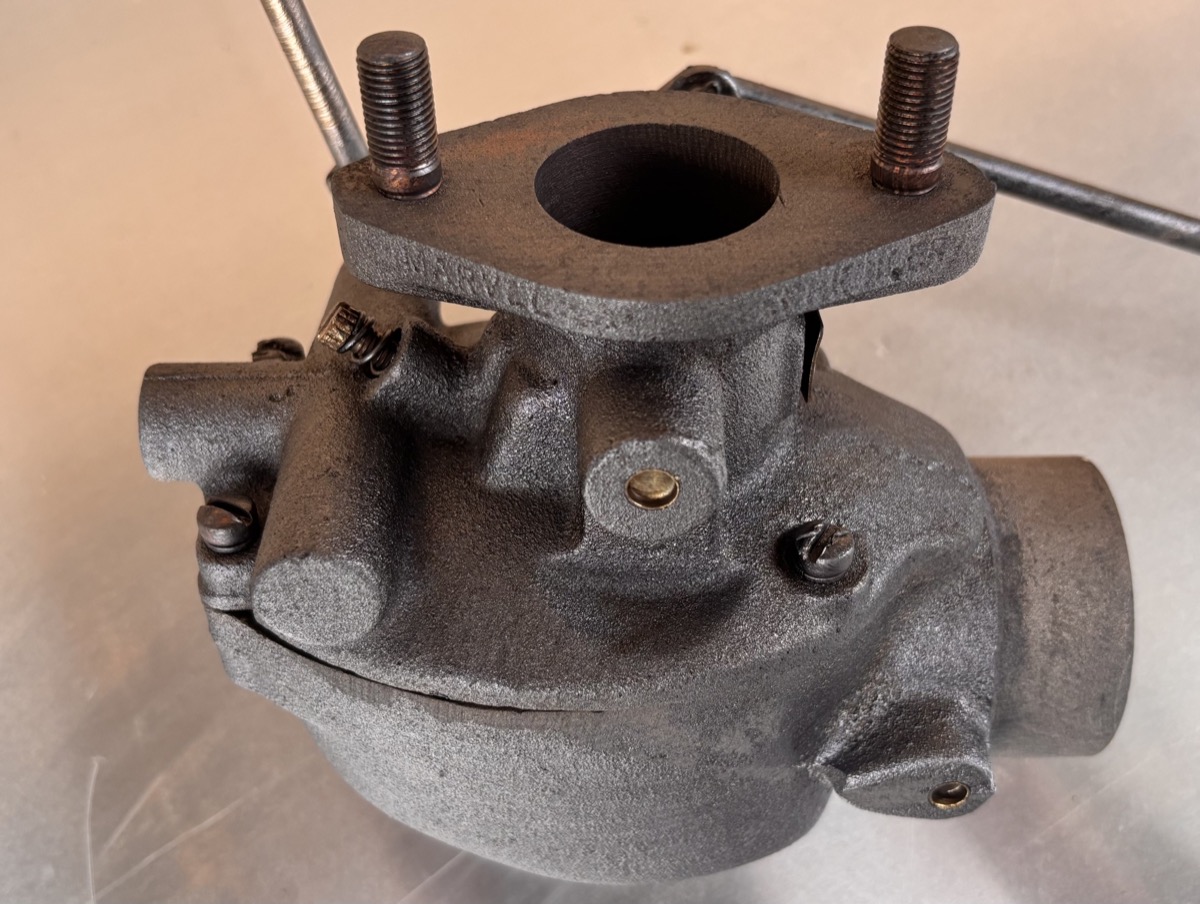
Carburetors, intake manifolds, valve covers, brackets — these parts look incredible when laser cleaned. The process removes decades of grime, paint, and corrosion without damaging casting marks, machined surfaces, or threaded holes. Check out our gallery for before-and-after examples of engine parts.
Suspension and Brake Components
Control arms, spindles, brake calipers, spring perches — all benefit from clean metal before powder coating or painting. Laser cleaning provides a better surface for coating adhesion than any abrasive method.
Hardware and Fasteners
Original bolts, nuts, and brackets are part of what makes a matching-numbers car correct. Rather than replacing rusty hardware with reproductions, laser cleaning can restore original fasteners to usable condition without affecting dimensions or threads.
What About Cost?
The honest answer: laser cleaning isn't the cheapest option per-part if you're comparing it to doing it yourself with a $30 wire wheel. But when you factor in the complete picture, the math changes:
- Time saved: Laser cleaning a fender takes 30-60 minutes. Doing it by hand with a wire wheel? Plan for a full day, plus the energy and frustration.
- No rework: Media blasting often requires additional body work to fix warped panels. Laser cleaning doesn't create new problems.
- No consumables: No blasting media to buy, no chemicals to purchase and dispose of.
- Better paint results: A laser-cleaned surface accepts primer more uniformly. Less prep work means less labor at the paint shop.
- Preserved value: On a numbers-matching car, keeping original metal intact adds real dollars to the car's value.
For a full breakdown of how laser cleaning compares to other methods, check our guide on laser cleaning vs. sandblasting.
Real Talk: When Laser Cleaning Isn't the Answer
We're not going to pretend laser cleaning solves everything. Here are situations where it might not be your best option:
- Deep structural rust — if the metal is perforated or paper-thin from years of neglect, no cleaning method can save it. That's a metal fabrication job.
- Entire body stripping on a budget — stripping an entire car body to bare metal is a big job. If the panels are thick and you're not worried about warping, chemical dipping or soda blasting might be more cost-effective for full-body work.
- Heavy undercoating removal — thick rubberized undercoating (the stuff that's a quarter-inch deep) can be removed by laser, but it's slow going. Mechanical removal of the bulk followed by laser finishing is often the smarter approach.
Being honest about limitations is important. We'd rather tell you the right tool for the job than sell you on something that doesn't make sense for your project. See our FAQ for more common questions.
Chicago and the Midwest: The Rust Capital
If you're restoring a classic car in the Chicago area, you already know what we're dealing with. Decades of road salt, lake-effect humidity, and harsh winters mean Midwest cars rust harder and faster than cars from the coasts or the South.
That's exactly why we started Chicago Rust. The cars coming out of Illinois, Indiana, Wisconsin, and Michigan barns have incredible potential — but they need serious rust remediation before restoration can begin. Laser cleaning lets you evaluate and preserve what's there instead of grinding it away and hoping for the best.
We serve the entire Chicagoland area with both shop-based and mobile laser cleaning services. Drop off your parts or we come to you.
Getting Started
If you're working on a classic car restoration and want to explore laser cleaning for your project, the process is simple:
- Send us photos of the parts or panels you need cleaned — close-ups of the rust help us quote accurately
- We'll give you a quote based on the size, quantity, and condition of the parts
- Drop off or schedule mobile service — most parts are turned around in 24-48 hours
- Pick up clean, bare metal ready for your next step — primer, powder coat, or assembly
No minimum order. Whether it's a single carburetor or a truckload of frame rails, we'll take care of it.
This article is for informational purposes only and does not constitute professional, legal, or safety advice. Always consult qualified professionals and verify information for your specific situation.
© 2026 Chicago Rust LLC. All rights reserved. Originally published at chicagorust.com/blog.
This article may not be reproduced, distributed, or republished without written permission from Chicago Rust LLC.
Restoring a Classic?
Send us photos of your project for a free quote. We'll tell you exactly what laser cleaning can (and can't) do for your build.
Get a Free Quote