Industrial Laser Cleaning: Applications in Manufacturing
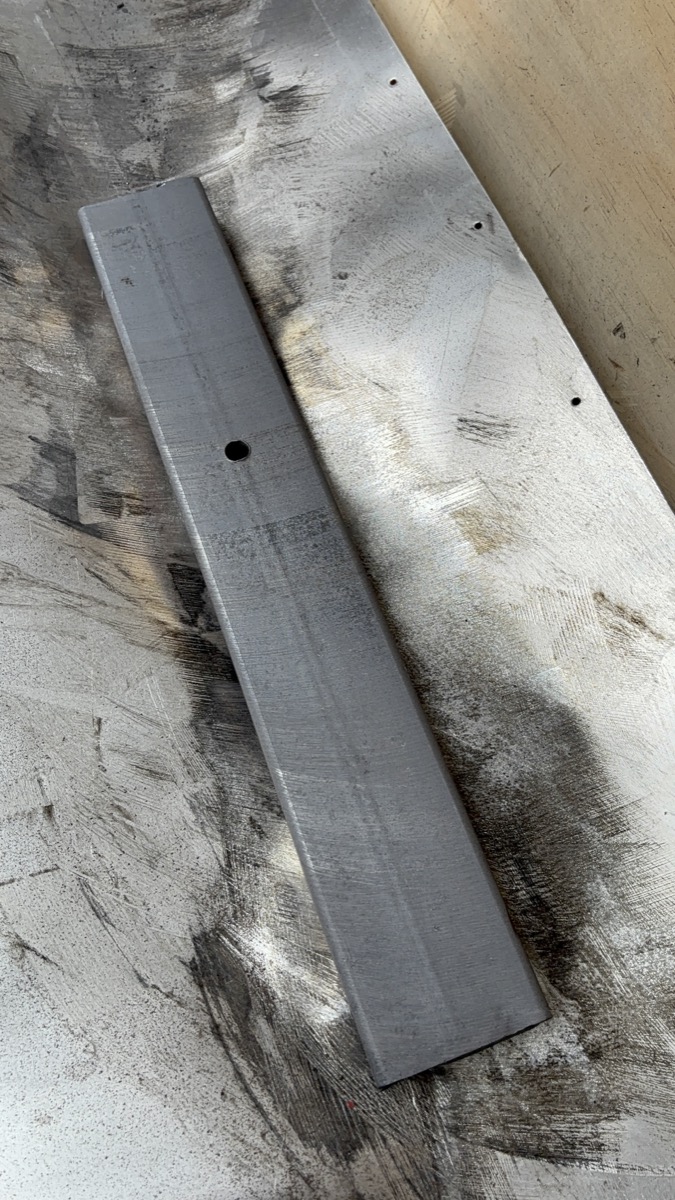
Walk into any manufacturing plant and you'll find the same problem in every department: contaminated metal surfaces that need to be clean before the next step can happen.
Rust on raw stock. Mill scale on steel plate. Oil residue on machined parts. Paint on fixtures that need recoating. Oxide on weld joints. Mold release buildup on tooling.
For decades, the solutions have been the same — wire wheels, chemical baths, sandblasting, manual grinding. They work, but they're slow, messy, inconsistent, and increasingly expensive to maintain.
Industrial laser cleaning is changing that equation. Here's how manufacturers across the Midwest and beyond are putting fiber laser technology to work on the production floor.
What Is Industrial Laser Cleaning?
Industrial laser cleaning uses a pulsed fiber laser beam to remove contaminants from metal surfaces through a process called laser ablation. The laser energy is absorbed by rust, paint, oxide, oil, and other surface contaminants — vaporizing them instantly — while the underlying metal reflects the beam and remains undamaged.
It's the same technology behind our laser rust removal services, scaled up for production environments. Modern industrial systems range from portable handheld units (100W-3000W) to fully automated robotic cells that run 24/7 on a production line.
No chemicals. No abrasive media. No contact with the surface. Just light doing the work.
Top Manufacturing Applications
1. Pre-Weld Surface Preparation
This is the single biggest application for laser cleaning in manufacturing — and the one with the clearest ROI.
Weld quality depends entirely on surface cleanliness. Rust, mill scale, oil, zinc coatings, and paint at the weld joint cause porosity, spatter, weak fusion, and rework. Most shops prep surfaces with grinders, wire wheels, or chemical wipes — processes that are slow, inconsistent, and generate waste.
Laser cleaning strips the joint area to bare, clean metal in seconds. The result: stronger welds, less rework, fewer rejects, and faster cycle times. We covered the full technical breakdown in our laser cleaning for welding guide.
A fabrication shop running 50 weld joints per shift can save 2-3 hours of grinding time per day just by switching to laser prep. Over a year, that's $15,000-$25,000 in labor savings alone — before counting reduced rework and consumables.
2. Paint and Coating Removal
Manufacturing environments constantly need to strip coatings — whether it's removing failed paint from fixtures, stripping powder coating from rework parts, cleaning paint hooks and racks, or prepping surfaces for recoating.
Chemical stripping is slow and creates hazardous waste. Sandblasting is aggressive and can damage precision surfaces. Laser cleaning removes paint, powder coating, primer, e-coat, and most industrial coatings cleanly and precisely — without affecting the base metal.
Applications include:
- Paint rack and hook cleaning — Strip accumulated paint from hanging fixtures instead of replacing them
- Rework parts — Remove failed coatings without re-machining the part
- Selective stripping — Clean only the area that needs recoating, masking-free
- Fixture maintenance — Keep jigs, fixtures, and tooling clean for accurate fitment
3. Mold Cleaning
Injection molds, rubber molds, tire molds, and die cast molds accumulate buildup over time — outgassing residue, release agents, rubber deposits, and flash. Traditional mold cleaning involves disassembly, chemical soaking, manual scraping, or dry ice blasting.
Laser cleaning removes mold buildup without disassembly in many cases. The laser reaches into vents, runners, and complex geometries that manual methods miss. Because there's zero contact and no abrasive impact, the mold surface finish stays intact — extending tool life and reducing maintenance downtime.
For high-volume molders running tight schedules, in-press laser cleaning between runs can eliminate the production downtime of a full mold pull.
4. Rust and Oxide Removal from Raw Stock
Raw steel and iron stock from the mill arrives with mill scale, flash rust from storage, and surface contamination. Before machining, welding, or coating, that contamination has to go.
Laser cleaning handles mill scale, flash rust, heavy rust, and surface oxide in a single pass. Unlike pickling (acid bath), there's no chemical waste or hydrogen embrittlement risk. Unlike grinding, there's no material removal or dimensional change.
This is especially valuable for:
- Precision parts where dimensional tolerance matters
- High-strength steel where hydrogen embrittlement from acid is a real risk
- Large surface areas where manual grinding isn't practical
- Automated lines where consistency is non-negotiable
5. Surface Texturing and Activation
Beyond just removing contaminants, laser cleaning can micro-texture a metal surface to improve adhesion for bonding, coating, or painting. By adjusting laser parameters, you can create a controlled surface profile that gives coatings and adhesives more grip.
This is increasingly used in automotive and aerospace manufacturing for:
- Pre-bonding surface activation (replacing chemical etching)
- Paint adhesion improvement (replacing phosphate wash)
- Gasket surface preparation
- Thermal spray bond coat prep
6. Post-Weld Cleanup
Heat tint (weld discoloration), oxide scale, and spatter left after welding need to be cleaned for both aesthetic and functional reasons — especially on stainless steel, where heat tint indicates a compromised passive layer that will corrode.
Laser cleaning removes heat tint and post-weld oxide without the risks of electrochemical cleaning (acid burns, electrical hazard) or the mess of pickling paste. It restores the passive layer and delivers a clean, uniform finish in one pass.
7. Maintenance and Repair (MRO)
Every manufacturing facility has equipment that needs cleaning and refurbishment — motors, gearboxes, housings, brackets, guards, frames. Laser cleaning turns a portable unit into a do-anything surface prep tool for the maintenance team:
- Strip rust and paint from equipment during overhauls
- Clean electrical contacts and connectors
- Remove grease and carbon buildup from engine components
- Prep surfaces for epoxy repair or re-welding
- Clean threads and mating surfaces on fasteners and flanges
Applications by Industry
| Industry | Primary Applications | Laser Power Range |
|---|---|---|
| Automotive Manufacturing | Weld prep, e-coat removal, mold cleaning, surface activation | 200W – 2000W |
| Aerospace | Coating removal, composite prep, turbine cleaning, NDT prep | 100W – 1000W |
| Metal Fabrication | Weld prep/cleanup, rust removal, paint stripping, fixture cleaning | 500W – 3000W |
| Tool & Die | Mold cleaning, die maintenance, surface restoration | 200W – 1000W |
| Foundry / Casting | Core box cleaning, mold maintenance, casting cleanup | 500W – 2000W |
| Oil & Gas | Pipe prep, flange cleaning, corrosion removal, coating prep | 1000W – 3000W |
| Power Generation | Turbine blade cleaning, boiler tube prep, nuclear decon | 200W – 1500W |
| Food & Beverage | Stainless cleaning, mold cleaning, equipment maintenance | 200W – 1000W |
The ROI Case for Manufacturing
Laser cleaning isn't cheap upfront. A production-grade system is a capital investment. But the total cost of ownership story is compelling — and it's why adoption is accelerating.
What You Eliminate
- Consumables: No grinding wheels, sanding discs, wire brushes, blast media, or chemicals to buy
- Waste disposal: No hazardous waste, no spent media, no chemical drums to manage
- PPE costs: Simpler PPE requirements vs. chemical handling or sandblasting
- Rework: Consistent, repeatable cleaning means fewer defects downstream
- Downtime: Faster cleaning cycles, less setup, no masking in many cases
What You Gain
- Throughput: Faster surface prep = faster cycle times = more parts per shift
- Quality: Consistent surface cleanliness = consistent weld/coating quality
- Flexibility: One tool handles rust, paint, oxide, oil — no switching between methods
- Safety: No chemical exposure, no silica dust, no flying abrasives
- Compliance: Easier to meet EPA, OSHA, and facility environmental requirements
Typical Payback
For shops replacing chemical stripping or heavy grinding operations, payback periods of 6 to 18 months are common. The math works fastest when you're currently spending significant money on consumables, waste disposal, or labor-intensive manual cleaning.
We broke down the full cost analysis in our laser cleaning cost guide. For a service quote on your application, reach out directly.
Handheld vs. Automated Systems
Handheld / Portable
Best for: job shops, maintenance departments, field service, varied work. An operator holds the cleaning head and directs the beam manually. Power typically ranges from 100W to 3000W. These systems are on wheels, plug into standard power (some models), and go where the work is.
Pros: Flexible, lower cost, works on any geometry, no programming required
Cons: Speed limited by operator, less consistent than automated, one part at a time
Automated / Robotic
Best for: production lines, high-volume repeat work, integration into existing cells. The laser head mounts on a robot arm, gantry, or custom fixture. Cleaning paths are programmed once, then repeat identically on every part.
Pros: Fastest throughput, perfect consistency, runs unattended, integrates with production
Cons: Higher cost, requires programming/integration, less flexible for one-offs
Most manufacturers start with a handheld system for maintenance and job-shop work, then add automated systems as they prove the ROI on specific production applications.
Getting Started with Industrial Laser Cleaning
If you're evaluating laser cleaning for your facility, here's the practical path:
- Identify your biggest pain point. Where are you spending the most time, money, or frustration on surface prep? That's your first application.
- Send us samples. We run test cleans on your actual parts and contaminants so you can see real results before committing. Contact us to arrange a test.
- Right-size the system. Don't overbuy. A 1500W handheld covers most shop applications. You only need 2000W+ for heavy mill scale, thick coatings, or production speed requirements.
- Plan the workflow. Where does the laser fit in your process flow? What power and extraction do you need? We help with layout and integration.
- Track the numbers. Measure before and after — cycle time, rework rate, consumable spend, waste disposal costs. The data makes the case for expansion.
Manufacturers use laser cleaning across a wide range of production and maintenance tasks, from weld prep to mold cleaning, reducing reliance on chemicals, sandblasting, and grinding.
Why Chicago Rust?
We're not just writing about laser cleaning — we use it every day. Chicago Rust operates a laser cleaning service in the Chicago metro area, serving shops, manufacturers, and industrial customers.
We've cleaned everything from classic car parts to industrial hoists to marine equipment. We know what works on the production floor because we work on production floors.
Whether you need a cleaning service for a one-time project or ongoing maintenance work, we can help.
This article is for informational purposes only and does not constitute professional, legal, or safety advice. Always consult qualified professionals and verify information for your specific situation.
© 2026 Chicago Rust LLC. All rights reserved. Originally published at chicagorust.com/blog.
This article may not be reproduced, distributed, or republished without written permission from Chicago Rust LLC.
Ready to See What Laser Cleaning Can Do in Your Shop?
Send us your toughest part. We'll clean it and show you the results — no obligation.
Request a Test Clean